Tag Archives: Christianity

The Hymn of Christ (Phil. 2:5-11)

Christ Jesus…
Who, though he was in the form of God, did not count equality with God a thing to be grasped, but made himself nothing, taking the form of a servant, being born in the likeness of men. And being found in human form, he humbled himself by becoming obedient to the point of death, even death on a cross. Therefore God has highly exalted him and bestowed on him the name that is above every name, so that at the name of Jesus every knee should bow, in heaven and on earth and under the earth, and every tongue confess that Jesus Christ is Lord, to the glory of God the Father.
(Philippians 2:5-11)

These verses, commonly referred to as the “Hymn of Christ”, were written by Paul in his letter to the Philippians as part of an exhortation to act in humility towards one another by appealing to the humility of the one they serve. Given the poetic nature and structure of the verses, some believe Paul was utilizing an earlier hymn already in use within the church. But whether the words originated with him or not their meaning remains the same – to encourage humbleness and love within the church while also teaching a very high Christology, as they trace the narrative arc from Jesus’ preexistent glory (v.5,6) through his incarnational humiliation (v.7,8) to his ascended exaltation (v. 9-11). As this portion of Scripture is studied and meditated upon, it will reveal the story of the gospel and should drive the reader to a greater love and humility towards others in light of Jesus’ example, as well as a deeper awe and worship of Christ as Lord.

The Glory of Christ

(v.5) Have this mind among yourselves, which is yours in Christ Jesus… The mind Paul wants the believers to have here is articulated in the preceding verses, where he exhorts the Philippians to complete his joy by “being of the same mind, having the same love” (v.2), doing “nothing from rivalry or conceit”, counting “others more significant” than themselves (v.3), and looking out for the “interests of others.” (v.4) He makes his appeal to them by pointing to the fact that this mindset existed in the one who is their final authority and the very object of their faith, Christ Jesus. The term “Christ” is the Greek translation for the Hebrew word “Messiah”, which means, “anointed one.” In Jewish thought the Messiah, whom the Hebrew Scriptures prophesied, was to be God’s agent of redemption for the people of Israel; one who would rule as the perfect Davidic king. During his earthly ministry, Jesus affirmed that he was indeed the Christ as well as the fulfillment of the entirety of Scripture (Matthew 5:17; 16:15-17; 26:63-64, Luke 24:27, 44, John 4:25-26; 5:39). However, he did not match the expectations of many who were looking for a conquering militaristic and political hero (much like David). What they received in Jesus was not simply a man to sit on their throne but something far greater.

(v.6) Who, though he was in the form of God did not count equality with God a thing to be grasped… This is one of the clearest attestations in the NT to the divinity of Christ, who, before coming to earth, existed in the form of God. The word “form” is translated from the Greek, morphē, and should be understood in this context as stating that Christ possesses the same essence, characteristics, and qualities of God. Paul writes elsewhere that in Christ “all the fullness of God was pleased to dwell” (Col. 1:19), and that in him “the whole fullness of deity dwells bodily.” (Col 2:9) The writer of Hebrews calls Jesus “the radiance of the glory of God and the exact imprint of his nature.” (Heb. 1:3) The apostle John unambiguously states that the Word made flesh “was God”, (John 1:1) and records the words of the apostle Thomas who, before the risen Christ, worshiped him as, “My Lord and my God” (John 20:28). Jesus is God – the eternal Word through whom the universe was created, (John 1:3, Col 1:16) and is therefore worthy of all honor and praise. However, he did not count equality with God a thing to be grasped… That is, Christ did not consider his position within the Godhead as something to be used to his own advantage, instead he used it for the benefit of his people in an unfathomable act of selfless love.

The Humiliation of Christ

(v.7) But made himself nothing, taking the form of a servant, being born in the likeness of men… It is a mystery beyond our finite comprehension – that the God of the universe became a man – or as John wrote, “The Word became flesh and dwelt among us…” In this most astounding act of humility the one who was above everything made himself nothing; and he who existed in the form of God took the form of a servant. He was born in the likeness of men, that is, he was born as a real flesh and blood man who was as fully human as he was divine. The gospels of Matthew and Luke tell of how the virgin Mary conceived by the work of the Holy Spirit and gave birth to the child whom Isaiah prophesied was to come. (Isaiah 9:6)

And so God entered into the human condition, lived as one of us, and shared in our pain and trails, our temptations and our sorrows because humanity, in it’s fallen state, was lost and separated from it’s creator and utterly incapable of reconciling itself to him apart from this incredible intervention. And thus, as John Calvin wrote, “The Son of God behooved to become our Immanuel, i.e., God with us; and in such a way, that by mutual union his divinity and our nature might be combined; otherwise neither was the proximity near enough, nor the affinity strong enough, to give us hope that God would dwell with us; so great was the repugnance between our pollution and the spotless purity of God.” Christ came as our mediator, our advocate – fully God and fully man – to bridge the chasm between Creator and creation. However, to merely dwell among men was not enough to justify them before a holy God. In order to fully reconcile and restore us to the Father, Jesus not only had to live as one of us; he had to die as one of us.

(v.8) And being found in human form, he humbled himself by becoming obedient to the point of death, even death on a cross… As if it were not astonishing enough that the Son of God would become a man, Christ was humble enough to become obedient to the point of death. Jesus lived a life of perfect obedience to the Law of God; though he was tempted like us in every way he was “without sin” (Heb. 4:15) Christ’s sinless life was necessary for us because, as Wayne Grudem puts it, “Unless he had done this for us, we would have no record of obedience by which we would merit God’s favor and merit eternal life with him.”  Just as the Law required a perfect lamb without blemish to be slaughtered on the Day of Atonement to clear the guilt of the people, Christ, likewise, was the perfect and sinless Lamb of God whose death “takes away the sin of the world” (John 1:29)

And this was not accomplished by means of an easy and quick death, but by death on a cross. In the ancient world, there was no form of execution more devastatingly painful, humiliating and ignoble than crucifixion, and thus, the cross of Christ is the ultimate antithesis to his preexistent majesty; the most profound act of humble obedience to his Father; and the greatest display of his love towards a rebellious humanity. It was at the cross where God’s loving mercy and holy wrath collided. For upon the cross, the pure and perfect Son of God, beloved by the Father, suffered not only physical pain, but also the agony of bearing our sins and taking the punishment deserved by sinners upon himself, by absorbing the fullness of his Father’s wrath. In this way, Jesus became the “propitiation for our sins.” (1 John 2:2) And not only did Christ appease justice on the cross, he also imputed his righteousness to all who would believe and put their trust in him. This is what Martin Luther referred to as “the great exchange”, as it is written, “For our sake he [God the Father] made him [Christ Jesus] to be sin who knew no sin, so that in him we might become the righteousness of God.” (2 Cor. 5:21)

The Exaltation of Christ

(v.9) Therefore God has highly exalted him and bestowed on him the name that is above every name… Thankfully, the story does not end with Good Friday. The horror of the crucifixion gave way to the glory of the resurrection, and Christ’s defeat on the cross was ultimately his victory over Satan, sin, and death. The implications of Jesus’ rising from the grave are monumental; it is a vindication of his claims as well as a foretaste of the eternal state of believers after death. Paul hinges the entirely of Christian faith upon the bodily resurrection, writing that, “if Christ has not been raised, your faith is futile and you are still in your sins.” (1 Cor17)

But Christ did indeed rise in a glorified body, after which, he ascended back to heaven, to sit at the right hand of his Father. He was perfectly obedient to his Father’s will and therefore God…highly exalted him. Peter preached this in his very first sermon at Pentecost, saying, “Let all the house of Israel therefore know for certain that God has made him both Lord and Christ, this Jesus whom you crucified.” (Acts 2:36) Not only did the Father exalt his Son, he also bestowed on him the name that is above every name. Andreas J. Köstenberger writes that, “The Jews referred to God using substitutions for the divine name. Approved substitutions were called kinnuyim…In Phil. 2:9 Paul uses the kinnuyim “the name”…Every Jew in Philippi who heard this phrase would automatically recognize these words as an allusion to the divine name.” Paul was clearly equating Jesus with Yahweh, and his audience would have realized this.

(v. 10) So that at the name of Jesus every knee should bow, in heaven and on earth and under the earth, (v.11) and every tongue confess that Jesus Christ is Lord, to the glory of God the Father. Before he ascended, Jesus told his disciples that he had received “All authority in heaven and on earth.” (Matt. 28:18) Throughout the NT we see that Christ is the object of praise; he is given worship by people and by angels, and even demons fall before him in acknowledgement of his status. The book of Revelation calls him the “King of kings” and “Lord of lords.” (Rev. 17:14; 19:16) And thus, the hymn states that at his name every knee should bow…and every tongue confess the Jesus Christ is Lord… for he is the supreme ruler of God’s eternal kingdom and he will reign forever in majesty. It should also be noted that, once again, Jesus is equated to Yahweh, as these words are borrowed from the book of Isaiah, where God himself says: “To me every knee shall bow, every tongue shall swear allegiance.” (Isa. 45:23) The hymn ends by stating that Jesus is exalted and praised by all creation to the glory of God the Father. Though he shares equal status of divinity, the Son’s humble subjection to the Father, which has existed since eternity past, is seen here to also continue forever into the future kingdom, as it is written, “When all things are subjected to him, then the Son himself will also be subjected to him who put all things in subjection under him, that God may be all in all.” (1 Cor. 15:28) This is not to say that Christ will cease to rule, for it is also written that, “…of his kingdom there will be no end.” (Luke 1:33) Rather, “the light of the knowledge of the glory of God…” is found “…in the face of Jesus Christ.” (2 Cor. 4:6) The hymn states that the Father is glorified by the worship of his Son, and that is because, as John Pipers says, “The glory of Christ is the glory of God” (emphasis added)

Some  say that pride is the mother of all sin, and hence, gave birth to all other sins. If this is the case then it is fitting that such an exquisite hymn about Christ would center on his humility – the antithesis to pride. What glorious paradoxes we find in Christ Jesus: the Ruler and the servant, the Judge and the condemned, the Victor and the victim, God and man. Richard Bauckham captured it well when he wrote that, “The radical contrast of humiliation and exaltation is precisely the revelation of who God is in his radically self-giving love. He rules only as the one who also serves. He is exalted above all only as the one who is also with the lowest of the low.”

May the humility of our Savior cause us to exalt him more greatly for all of our days.
The True and Better One

If you’ve been interested in Reformed theology over the last several years, or you quote John Piper a lot, or you only use the ESV translation then you might have read/heard this before. If so, it’s worth another read. For those who haven’t, it’s part of an address Timothy Keller gave at a Gospel Coalition conference titled “Gospel-Centered Ministy”.
It’s pretty awesome…

Jesus is the true and better Adam who passed the test in the garden and whose obedience is imputed to us.

Jesus is the true and better Abel who, though innocently slain, has blood now that cries out, not for our condemnation, but for acquittal.

Jesus is the true and better Abraham who answered the call of God to leave all the comfortable and familiar and go out into the void not knowing wither he went to create a new people of God.

Jesus is the true and better Isaac who was not just offered up by his father on the mount but was truly sacrificed for us. And when God said to Abraham, “Now I know you love me because you did not withhold your son, your only son whom you love from me,” now we can look at God taking his son up the mountain and sacrificing him and say, “Now we know that you love us because you did not withhold your son, your only son, whom you love from us.”

Jesus is the true and better Jacob who wrestled and took the blow of justice we deserved, so we, like Jacob, only receive the wounds of grace to wake us up and discipline us.

Jesus is the true and better Joseph who, at the right hand of the king, forgives those who betrayed and sold him and uses his new power to save them.

Jesus is the true and better Moses who stands in the gap between the people and the Lord and who mediates a new covenant.

Jesus is the true and better Rock of Moses who, struck with the rod of God’s justice, now gives us water in the desert.

Jesus is the true and better Job, the truly innocent sufferer, who then intercedes for and saves his stupid friends.

Jesus is the true and better David whose victory becomes his people’s victory, though they never lifted a stone to accomplish it themselves.

Jesus is the true and better Esther who didn’t just risk leaving an earthly palace but lost the ultimate and heavenly one, who didn’t just risk his life, but gave his life to save his people.

Jesus is the true and better Jonah who was cast out into the storm so that we could be brought in.

Jesus is the real Rock of Moses, the real Passover Lamb, innocent, perfect, helpless, slain so the angel of death will pass over us.

He’s the true temple, the true prophet, the true priest, the true king, the true sacrifice, the true lamb, the true light, the true bread.

The Bible’s really not about you—it’s about him.

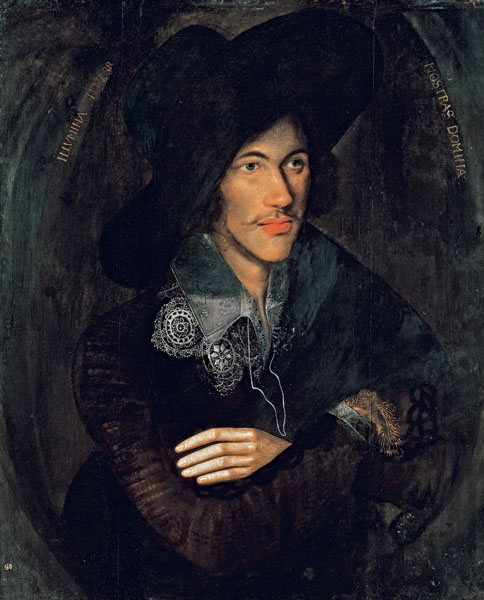
La Carona (The Crown)

La Carona


By John Donne (1572-1631)

Deign at my hands this crown of prayer and praise,
Weaved in my lone devout melancholy,
Thou which of good, hast, yea art treasury,
All changing unchanged Ancient of days,
But do not, with a vile crown of frail bays,
Reward my muse’s white sincerity,
But what thy thorny crown gained, that give me,
A crown of Glory, which doth flower always;
The ends crown our works, but thou crown’st our ends,
For at our end begins our endless rest,
The first last end, now zealously possess’d,
With a strong sober thirst, my soul attends.
‘Tis time that heart and voice be lifted high,
Salvation to all that will is nigh.

Annunciation

Salvation to all that will is nigh,
That All, which always is All everywhere,
Which cannot sin, and yet all sins must bear,
Which cannot die, yet cannot choose but die,
Lo! faithful Virgin, yields Himself to lie
In prison, in thy womb; and though He there
Can take no sin, nor thou give, yet He’ll wear
Taken from thence, flesh, which death’s force may try.
Ere by the spheres time was created, thou
Wast in His mind, who is thy Son, and Brother,
Whom thou conceiv’st, conceived; yea thou art now
Thy Maker’s maker, and thy Father’s mother,
Thou hast light in dark; and shutt’st in little room,
Immensity cloistered in thy dear womb.

Nativity

Immensity cloistered in thy dear womb,
Now leaves his well-beloved imprisonment,
There he hath made himself to his intent
Weak enough, now into our world to come;
But Oh, for thee, for him, hath th ‘Inne no room?
Yet lay him in this stall, and from the Orient,
Stars, and wise men will travel to prevent
Th’ effect of Herod’s jealous general doom;
See’st thou, my soul, with thy faith’s eyes, how He
Which fills all place, yet none holds Him, doth lie?
Was not His pity towards thee wondrous high,
That would have need to be pitied by thee?
Kiss Him, and with Him into Egypt go,
With His kind mother, who partakes thy woe.

Temple

With his kind mother, who partakes thy woe,
Joseph turn back; see where your child doth sit,
Blowing, yea blowing out those sparks of wit,
Which himself on the doctors did bestow;
The Word but lately could not speak, and lo!
It suddenly speaks wonders, whence comes it,
That all which was, and all which should be writ,
A shallow seeming child, should deeply know?
His Godhead was not soul to his manhood,
Nor had time mellow’d him to this ripeness,
But as for one which hath a long task, ’tis good,
With the Sun to begin his business,
He in His age’s morning thus began
By miracles exceeding power of man.

Crucifying

By miracles exceeding power of man,
He faith in some, envy in some begat,
For, what weak spirits admire, ambitious hate:
In both affections many to him ran,
But O! the worst are most, they will and can,
Alas, and do, unto the immaculate,
Whose creature Fate is, now prescribe a fate,
Measuring self-life’s infinity to a span,
Nay to an inch. Lo!, where condemned he
Bears his own cross, with pain, yet by and by
When it bears him, he must bear more and die;
Now thou art lifted up, draw me to thee,
And at thy death giving such liberal dole,
Moist, with one drop of thy blood, my dry soul.

Resurrection

Moist, with one drop of thy blood, my dry soul
Shall – though she now be in extreme degree
Too stony hard, and yet too fleshly – be
Freed by that drop, from being starved, hard, or foul,
And life, by this death abled, shall control
Death, whom thy death slew; nor shall to me
Fear of first or last death, bring misery,
If in thy little book my name thou enroll,
Flesh in that long sleep is not putrified,
But made that there, of which, and for which ’twas;
Nor can by other means be glorified.
May then sins sleep, and deaths soon from me pass,
That waked from both, I again risen may
Salute the last, and everlasting day.

Ascension

Salute the last, and everlasting day,
Joy at the uprising of this Sun, and Son,
Ye whose just tears, or tribulation
Have purely washed, or burnt your drossy clay;
Behold the Highest, parting hence away,
Lightens the dark clouds, which He treads upon,
Nor doth He by ascending, show alone,
But first he, and he first enters the way.
O strong Ram which hast battered heaven for me,
Mild Lamb, which with thy blood, hast marked the path;
Bright Torch, which shin’st, that I the way may see,
Oh, with Thy own blood quench Thy own just wrath.
And if the Holy Spirit, my Muse did raise,
Deign at my hands this crown of prayer and praise.

They Were Darkness

“For at one time you were darkness, but now you are light in the Lord.”
Ephesians 5:8

Many religions adhere to the idea that mankind has within itself the basic goodness or moral neutrality and free will required to take the proper steps towards reaching the supreme ends of its spiritual journey. Christianity, among other major faiths, stands alone in teaching that mankind is unable to achieve salvation or right standing with God through its own effort (Isa. 64:6; Rom. 3:10-12). Notice that in the verse above, Paul, writing to the believers at Ephesus, does not say that they were at one time in darkness but that they themselves were the darkness. There is a great divide between these two concepts. It is feasible that, by taking the proper steps, the creature who is merely in darkness may find a way out of it. But if the creature itself is the darkness there in no such hope, for how is the darkness to change itself into light; how can it change its own nature?

In short, it can’t.

But Paul tells the Ephesians that though they were once darkness they are now light in the Lord. How is this so? He says earlier in the same letter that it is not of their own doing but is the gift of God (Eph. 2:8) and is accomplished by way of their union with the Lord Jesus who is the “true light” (John 1:9). By receiving Him and believing in Him, the creature is transformed by Him and given the right to be a child of God (John 1:12). Christianity is not self-improvement or behavior modification. It is death and resurrection. It is new birth. Christ died for our sins in order that we may die to our sins; He was raised to life that we may be raised in Him; born again by the Spirit and reconciled to the Father. Salvation is not something we do, it is something that has been done for us. And when this gift is received the result is that the darkness turns to light, as it is written: “If anyone is in Christ, he is a new creation.The old has passed away; behold, the new has come” (2 Cor. 5:17).
_______________________________________________________

Christianity is not self-improvement or behavior modification. It is death and resurrection.
It is new birth.

_________________________________________________________

Scripture teaches that the bad news is worse than we ever feared and that the good news is better than we ever hoped for. Apart from Christ we are dead in our sins (Eph. 2:1), in Christ we are forgiven (Col. 1:14). Apart from Him the wrath of God remains on us (John 3:36), in Him we have peace with God by the blood of His cross (Col 1:20). Apart from Him our lot is the lake of fire (Rev. 20:15), in Him ours is the kingdom of heaven (Luke 12:32). Apart from Christ we are darkness, in Christ we are light.

Who Do You Say That I Am?

Jesus once asked his disciples about what the people of that day were saying about him and who they thought he was. Here are some of the answers the world has given to that question over the last two millenia:

a created being
a liar
a lunatic
a legend
a megalomaniac
a gnostic
an alien
an avatar
merely a good moral teacher
merely a great thinker
merely an example
merely a prophet
one of many ways to God or heaven
one of many gods
a lesser god
the spirit brother of Lucifer
the archangel Michael
a deceiver and false messiah
a counter-cultural, peasant philosopher
an impassive dullard
a pushover pacifist
an enlightened Master
the secret husband of Mary Magdalene
an Arian and enemy of the Jews
a communist
a hippie
a buzz kill
a white republican
a religious taskmaster
a teetotaler
a means to prosperity and perfect health
a crutch
a false hope
a dead man

The list could go on, but the point is that  Jesus of Nazareth is not only the most recognized and influential person in all of  history, he is also the most controversial, misunderstood and re-imagined. Here is the conversation mentioned above as it is recorded in the Gospel of Matthew:

Now when Jesus came into the district of Caesarea Philippi, he asked his disciples, “who do people say that the Son of Man is?” And they said, “Some say John the Baptist, others say Elijah, and others Jeremiah or one of the prophets.” He said to them, “But who do you say that I am?” Simon Peter replied, “You are the Christ, the Son of the living God.” And Jesus answered him, “Blessed are you, Simon Bar-Jonah! For flesh and blood has not revealed this to you, but my Father who is in heaven.” (Matthew 16:13-17)

Jesus affirmed that he is the Christ – the prophesied Messiah of Scripture – and the very Son of God. In fact, he is no less than God himself, the creator of all things, come in the flesh (John 1:1-18)…and this, I believe, is why we have created so many different versions of him: because many of us just can’t live with the implications of his claims actually being true.

If  Jesus is who he says he is then we owe him everything: our allegiance, our lives, and our eternal souls.

If he is who he says he is we must heed his command to repent for our sinfulness, cling to his cross, believe in his resurrection, and put our faith and trust wholly in him for our salvation.

If he is who he says he is then our pursuit of wealth, status, and comfort must be replaced with a pursuit for holiness and righteousness in all areas of our lives. We must put an end to our self-centeredness and start treating others as better than ourselves, even to the point of loving those who persecute us.

If he is who he says he is then he is coming back at the end of the age to judge everyone who has ever lived and he alone will determine their eternal state – either with him or apart from him.

If he is who he says he is then we must bow to him as Lord and God.

But this is an offense to us. It sounds like foolishness and it feels like a stumbling block. We are far too intelligent nowadays to believe in supernatural myths, we are too self-sufficient to need a Savior, we are too proud to see that we are a broken, rebellious humanity, and we are too busy being our own gods to worship the one who really is.

So we try our hardest to strip Jesus of all that authority, to make him more docile, easier to handle, and easier to ignore. We would prefer a safer Christ, one who doesn’t demand so high a cost for following him.

But that is not the Jesus of Scripture.  The Jesus of Scripture tells us that it’s all or nothing. It is as C.S. Lewis once put it, “Christianity, if false, is of no importance, and if true, of infinite importance. The only thing it cannot be is moderately important.”

And so we must make our choice, because like it or not, Jesus Christ cannot be ignored.  He is planted firmly in the middle of our history, he is found in all the major faiths of of the world, he’s in every bookstore and every university, and from the the silver screen to the soup kitchens, from the pulpits to the prisons his voice can be heard, and he is asking us the same  question  today that he asked his disciples, “Who do you say that I am?”

Let us end by simply reading Jesus in his own words…

If anyone would come after me, let him deny himself and take up his cross and follow me. For whoever would save his life will lose it, but whoever loses his life for my sake will find it. For what will it profit a man if he gains the whole world and forfeits his soul? Or what shall a man give in return for his soul?  For the Son of Man is going to come with his angels in the glory of his Father, and then he will repay each person according to what he has done.

Everyone who acknowledges me before men, I also will acknowledge before my Father who is in heaven, but whoever denies me before men, I also will deny before my Father who is in heaven.

All authority in heaven and on earth has been given to me

I am the bread of life; whoever comes to me shall not hunger, and whoever believes in me shall never thirst.

I am the light of the world, whoever follows me will not walk in darkness, but will have the light of life.

I am the good shepherd, the good shepherd lays down his life for the sheep

I am the way, and the truth, and the life. No one comes to the Father except through me.

I am the vine; you are the branches. Whoever abides in me and I in him, he it is that bears much fruit, for apart from me you can do nothing.

I am the first and the last, and the living one. I died, and behold I am alive forevermore, and I have the keys of Death and Hades.

Behold, I am coming soon, bringing my recompense with me, to repay everyone for what he has done. I am the Alpha and the Omega…the beginning and the end

I am the resurrection and the life. Whoever believes in me, though he die, yet shall he live, and everyone who lives and believes in me shall never die. Do you believe this?

Good News of Great Joy

“And the angel said to them, “Fear not, for behold, I bring you good news of great joy that will be for all the people. For unto you is born this day in the city of David a Savior, who is Christ the Lord.” -Luke 2:10-11

This was the heavenly message spoken by the angel to the shepherds outside Bethlehem on the day of Christ’s birth. It begins with the words “fear not” for it does not bring a word of judgment but one of mercy and salvation. It brings the “good news” – that is, the gospel – of “great joy” – for the coming of the Son of God into the world is a glorious event indeed, and cause for rejoicing.

And this good news is not only for Israel but for “all the people”, for Jesus came to redeem both Jew and Gentile. This points back to God’s covenant promise to Abraham – that in him, that is, through his lineage, all the families of the world would be blessed (Gen. 12:3).

The angel continues: “For unto you is born…” This phrase echoes back to the first words of Isaiah’s messianic prophecy: “For to us a child is born, to us a son is given, and the government shall be upon his shoulder, and his name shall be called Wonderful Counselor, Mighty God, Everlasting Father, Prince of Peace” (Isa 9:6). This child is not simply born, he is born “to us” as a gift from God.

The angel announces that the child is born in “the city of David” – that is, Bethlehem – as was foretold by the prophet Micah: But you, O Bethlehem Ephrathah, who are too little to be among the clans of Judah, from you shall come forth for me one who is to be ruler in Israel, whose coming forth is from of old, from ancient days.” (Micah 5:2) Jesus is the descendant of King David who fulfills the covenantal promise that God would establish a seed from David’s line to rule his kingdom forever (2 Samuel 7:12-13; 1 Chronicles 17:11-14)

The angel concludes its message by ascribing three titles to the child:

1) Savior: The entire narrative of the Old Testament (after Creation and the Fall) is the unfolding of God’s redemptive plan for humanity. The narrative reaches its climax in Jesus, whose name literally means “The Lord is Salvation”. It is Jesus himself who saves his people from their sins and the wrath of God by dying in their stead.

2) Christ: The Greek translation of the Hebrew word “messiah”, that is, the long awaited redeemer of God’s people who is prophesied about throughout the OT; from the “offspring” of the woman spoken of in the Garden of Eden (Gen. 3:14-15) to the “messenger of the covenant” whom Malachi wrote of (Mal. 3:1-3).

3) Lord: Jesus is the supreme ruler of all creation; the resurrected and ascended Lord of the universe. The Greek word for “Lord” can simply mean master but is also used interchangeably by the New Testament writers to translate the covenant name of God (Yahweh) and should therefore be considered a title of deity when ascribed to Jesus, who is both fully God and man.

On Christmas we celebrate the advent of our Lord; the eternal Word made flesh. What this means for us most practically and most deeply is that God loves us. Though sinners we be, the very Son of God loved us enough to leave his heavenly glory for a filthy manger and ultimately a bloody cross, so that we may be forgiven, redeemed and remade. This is most certainly good news – the best news in fact, and deserves to be received with the greatest joy.

“Minuit, Chrétiens” (Midnight, Christians)

A translation of the original french poem 
"Minuit, Chrétiens" by Placide Cappeau, which 
later became the english carol "O Holy Night".  

Midnight, Christians, it is the solemn hour
When God as man descended unto us
To erase the stain of original sin
And to end the wrath of his Father
The entire world thrills with hope
On this night that gives it a Savior

     People kneel down, wait for your deliverance
     Christmas, Christmas, here is the Redeemer
     Christmas, Christmas, here is the Redeemer

May the ardent light of our faith
Guide us all to the cradle of the infant
As in ancient times a brilliant star
Guided the Oriental kings there
The King of kings was born in a humble manger
O mighty ones of today, proud of your greatness

     It is to your pride that God preaches
     Bow your heads before the Redeemer
     Bow your heads before the Redeemer

The Redeemer has broken every bond
The earth is free, and heaven is open
He sees a brother where there was only a slave
Love unites those who iron had chained
Who will tell him of our gratitude
For all of us He is born, He suffers and dies

      People stand up, sing of your deliverance
      Christmas, Christmas, sing of the Redeemer
      Christmas, Christmas, sing of the Redeemer

Even Jesus Wept

How difficult it is to cope when we cannot see the reasons for why God allows certain things to happen. How cruel and arbitrary it can seem when the woes of this life befall us, when death steals our loved ones and despair pierces our hearts. Indeed, it can be overwhelming to make sense of the mess we’re in but to believe in God means we must have faith that He is in control, that He knows what He’s doing, and that He works all things for the good of those who love Him (Rom 8:28).  His ways and His thoughts are higher than ours (Isa 55:9) and we cannot presume to understand His eternal scope nor can we see the fullness of His plans for us. To paraphrase a parable I once read:

It is like a man who comes upon the construction of a building that is only half-finished and says to the builder, “This place is a mess, there is dirt and rubble everywhere and nothing is put together properly” The builder in reply says, “Have patience friend, what you see now is a work in progress, but once completed you will marvel at its beauty.”

The world is still in the process of being restored, and in the meantime there is a biblical precedent for the suffering of believers (Rom 5:3-4; 2 Thess 1:4; 2 Tim 2:3; 1 Peter 4:12-13). Christians are not spared trials; they are not spared pain. In fact, Scripture makes it clear that suffering will be used in the sanctification of believers; just as pressure creates diamonds from coal and gold is refined in the fire. Even the Son of God suffered and died in order to bring salvation to his people.

However, the knowledge that God uses our trials for good does not take away the sadness we feel, and that’s OK. Jesus wept at the tomb of his friend Lazarus even though he knew he would raise him back to life moments later. Why? I believe it’s because sorrow is a proper response to the sufferings of this world, and Jesus, who is the source of life, was acknowledging death as something terrible. There are times when it is right for us to be sorrowful and mourn over the reality of our fallen state; to let the hurt we feel be a sobering reassurance of our weakness and frailty and a reminder of how much we need the everlasting arms of our Father to embrace us; He is our only hope and refuge. For God has promised, to those who put their faith in Him, that all our pain and suffering will not have been in vein, and even our deaths are not the end, but rather a new beginning.

“Do not let your hearts be troubled. Trust in God; trust also in me. In my Father’s house are many rooms; if it were not so, I would have told you. I am going there to prepare a place for you. And if I go and prepare a place for you, I will come back and take you to be with me that you also may be where I am.” (John 14:1-3)

“No longer will there be a curse upon anything. For the throne of God  and of the Lamb will be there, and his servants will worship him. And they will see his face, and his name will be written on their foreheads. And there will be no night there – no need for lamps and sun – for the Lord God will shine on them. And they will reign forever and ever. (Revelation 22:3-5)

The End of All Things (A Hymn for the Trinune God)

Our God is the Father, the Spirit, and Son
One God in three Persons; three Persons in One
And the heavenly host adore Him and sing
  For the glory of God is the end of all things

The Father Almighty has shown His great love
With every good gift that has come from above
And the righteous are safe in the shade of His wings
  'Till the world is made new at the end of all things

The Son took on flesh; for our sins He did die
Resurrected to life and ascended on high
The Lord of all lords and the King of all kings
  His power shall reign at the end of all things

The Spirit indwells and new birth is received
Salvation bestowed upon all who've believed
In truth He shall lead them with gifts that He brings
  And the church will arise at the end of all things

The sun, moon, and stars are the work of His hands
And history bends to the will of His plans
The heavens cry out and eternity sings:
  'The glory of God is the end of all things'

Monday Morning Music (Gungor – Please Be My Strength)

On Time

On Time


By John Milton (1608-1674)

Fly, envious Time, till thou run out thy race;
Call on the lazy leaden-stepping hours,
Whose speed is but the heavy plummet’s pace;
And glut thyself with what thy womb devours,
Which is no more then what is false and vain,
And merely mortal dross;
So little is our loss,
So little is thy gain.
For when, as each thing bad thou hast entomb’d
And last of all thy greedy self consumed,
Then long Eternity shall greet our bliss,
With an individual kiss;
And Joy shall overtake us, as a flood,
When every thing that is sincerely good,
And perfectly divine,
With truth, and peace, and love, shall ever shine,
About the supreme throne
Of Him, to whose happy-making sight, alone,
When once our heavenly-guided soul shall climb,
Then all this earthly grossness quit,
Attired with stars, we shall for ever sit,
Triumphing over Death, and Chance, and thee, O Time!

Trinitarian Miscellanies (#1)

Triquetra-circle-interlaced
God the Father

sends
God the Son
who dies and rises and sends
God the Holy Spirit
to indwell the believer who is then enabled by
God the Holy Spirit
to put their faith in the dying and rising of
God the Son
for their salvation and reconciliation to
God the Father.

The Beginning, the Middle, and the End

“The emanation or the communication of the divine fullness, consisting in the knowledge of God, love to him, and joy in him, has relation indeed both to God and the creature: but it has relation to God as its fountain, as the thing communicated is something of its internal fullness. The water in the stream is something of the fountain; and the beams of the sun are something of the sun. And again, they have relation to God as their object: for the knowledge communicated is the knowledge of God; and the love communicated, is the love of God; and the happiness communicated, is joy in God. In the creature’s knowing, esteeming, loving, rejoicing in, and praising God, the glory of God is both exhibited and acknowledged, his fullness is received and returned. Here is both an emanation and remanation, the refulgence shines upon and into the creature, and is reflected back to the luminary. The beams of glory come from God, are something of God, and are refunded back again to their original. So that the whole is of God, and in God, and to God; and he is the beginning, and the middle, and the end.”

-Jonathan Edwards (From The End for which God Created the World)

No Mere Mortals

As you go about the seemingly mundane business of your ordinary life today consider these words by C.S. Lewis – they just might make your day a little more interesting.

It is a serious thing to live in a society of possible gods and goddesses, to remember that the dullest and most uninteresting person you talk to may one day be a creature which, if you saw it now, you would be strongly tempted to worship, or else a horror and a corruption such as you now meet, if at all, only in a nightmare. All day long we are, in some degree, helping each other to one or other of these destinations. It is in the light of these overwhelming possibilities, it is with the awe and the circumspection proper to them, that we should conduct all our dealings with one another, all friendships, all loves, all play, all politics. There are no ordinary people. You have never talked to a mere mortal. Nations, cultures, arts, civilization—these are mortal, and their life is to ours as the life of a gnat. But it is immortals whom we joke with, work with, marry, snub, and exploit—immortal horrors or everlasting splendors.

Longing For Home

“But as it is, they desire a better country, that is, a heavenly one…”(Hebrews 11:16)

C.S. Lewis once argued that “Creatures are not born with desires unless satisfaction for those desires exists.” This can be seen in our biology: We hunger and there is food; we thirst and there is water; we have sexual desires and there is sex. But what are we to make of of those desires in us that do not seem to correspond to anything in the natural world? Why do we desire meaning and purpose for our lives? What are these longings we have for love and fidelity. Where did this universal notion of right and wrong come from? And how should we respond to that ache we get in our chests (the one that feels curiously like homesickness) when we look at something immensely beautiful like a sunset, a sweeping vista, or the starry hosts above?

In response to questions like these, Lewis famously wrote, “If I find in myself a desire which no experience in this world can satisfy, the most probable explanation is that I was made for another world”. He goes on to suggest that earthly pleasures were not meant to satisfy such unearthly desires, they were meant to arouse them while pointing to the real thing, the real satisfaction. They themselves are not the real thing, but only “a kind of copy, or echo, or mirage.” If I may use my own illustration, they are a bit like looking through a keyhole and glimpsing shadows of things to come; glimpses that push us to keep searching for that “better country…a heavenly one” (Heb.11:16)

________________________________________________________

…earthly pleasures were not meant to satisfy such unearthly desires…

________________________________________________________

But let us not make the mistake of concluding that all we are really after is simply greater, otherworldly pleasures. One of the strangest things about man (at least from a naturalist perspective) is his desire to worship; to worship something greater than himself and devote himself to something transcendent. This has been true of humanity in all times and places. Augustine summed up the reason for this succinctly and beautifully when he wrote, “You [God] stir man to take pleasure in praising you, because you have made us for yourself, and our heart is restless until it rests in you.” Money, sex, power, status – all these things that most of us spend most our lives chasing – are fleeting. They will not do, not ultimately, for we are creatures with eternity set in our hearts and our longing for love, joy, and peace will not be fulfilled until we are connected to the Source of love, joy, and peace. Until we’re grafted to the Vine we’re just dead branches fit for the fire. So it is God Himself we are after. It is in Him, and Him alone, that we find our greatest pleasure. In Him our longing for meaning, purpose, morality, beauty, and transcendence are satisfied completely.

But it is no use to speak of finding our ultimate satisfaction in God without also speaking of how we are to come to God. For the truth is that we are rebels who  have chosen autonomy from the Creator, and because of our sin we are separated from He who is our true satisfaction. But thankfully God shows us grace – that is, undeserved benevolence – and provides a means of reconciliation through the mediating work of His Son Jesus Christ. Jesus, the eternal Word, the second Person of the Trinity, took on flesh, bore our sins upon the cross, rose from the dead with all authority in heaven and on earth, and now offers us the gift of eternal life. What salvation requires from us is to repent of our rebellion and believe on Him, both as our crucified Savior and our risen Lord. This is how we are reconciled to God – in the very person of Jesus Christ who is, as the ancient creed states, ‘very God of very God’.

__________________________________________________________

So it is God himself we are after. It is in Him, and Him alone, that we find our greatest pleasure.

__________________________________________________________

The New Testament concludes with a picture of God and His people residing together in perfection. In the book of Revelation John is given magnificent visions of the throne room in heaven and New Jerusalem; shadowless  ‘keyhole glimpses’, if you will, of the future satisfaction of God’s people. A people worshiping their Savior in all His glory; a people who are finally home:

Then I looked and heard the voice of many angels, numbering thousands upon thousands, and ten thousand times ten thousand. They encircled the throne and the living creatures and the elders. In a loud voice they were saying:

“Worthy is the Lamb, who was slain,
to receive power and wealth and wisdom and strength and honor and glory and praise!”

Then I heard every creature in heaven and on earth and under the earth and on the sea, and all that is in them, saying:

“To him who sits on the throne and to the Lamb
be praise and honor and glory and power,
for ever and ever!”

The four living creatures said, “Amen,” and the elders fell down and worshiped. (Revelation 5:11-14)

______________________________________

The twenty-four elders and the four living creatures fell down and worshiped God, who was seated on the throne. And they cried: “Amen, Hallelujah!”

Then a voice came from the throne, saying:

“Praise our God, all you his servants,
you who fear him, both great and small!”

Then I heard what sounded like a great multitude, like the roar of rushing waters and like loud peals of thunder, shouting:

“Hallelujah!  For our Lord God Almighty reigns.
Let us rejoice and be glad and give him glory!
For the wedding of the Lamb has come, and his bride has made herself ready. Fine linen, bright and clean, was given her to wear.”

Then the angel said to me, “Write this: Blessed are those who are invited to the wedding supper of the Lamb!” And he added, “These are the true words of God.” (Revelation 19:4-19)

______________________________________

Then the angel showed me the river of the water of life, as clear as crystal, flowing from the throne of God and of the Lamb down the middle of the great street of the city. On each side of the river stood the tree of life, bearing twelve crops of fruit, yielding its fruit every month. And the leaves of the tree are for the healing of the nations. No longer will there be any curse. The throne of God and of the Lamb will be in the city, and his servants will serve him. They will see his face, and his name will be on their foreheads. There will be no more night. They will not need the light of a lamp or the light of the sun, for the Lord God will give them light. And they will reign for ever and ever. (Revelation 22:1-5)